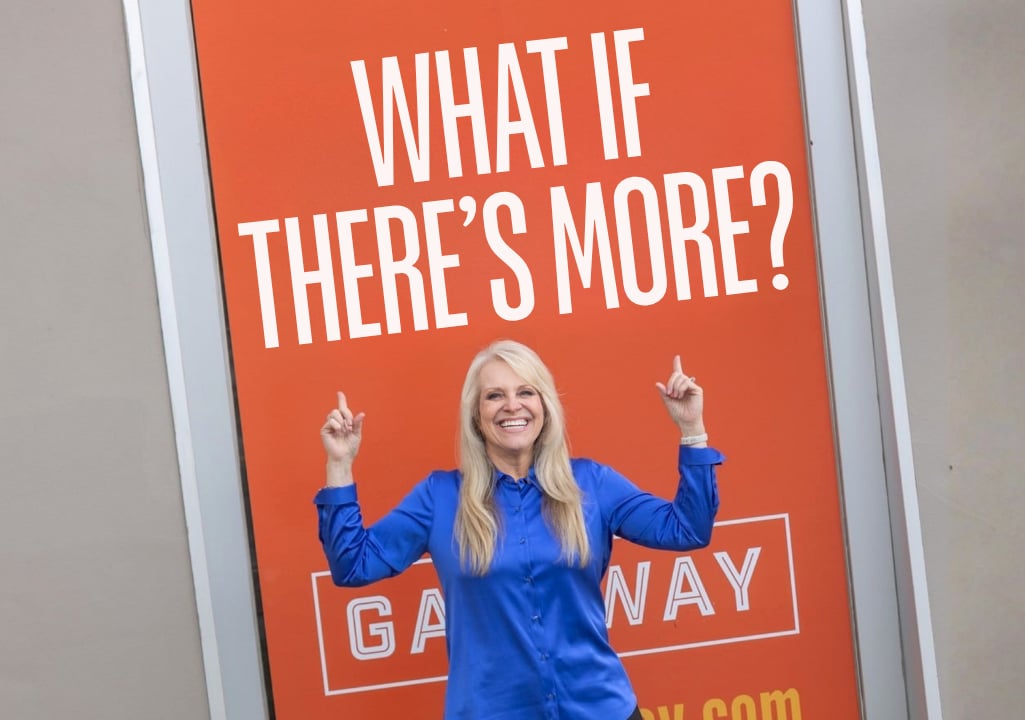
Sometimes the Answer Isn't Just Spending Less. It's Creating More Opportunity.
Years ago, I read a little book called The Richest Man in Babylon.
If you've never read it, it's filled with simple principles about money and building financial security. But there was one principle that stuck with me—and I've carried it throughout my career:
Increase your ability to earn.
I've thought about those words countless times over the years.
We talk a lot about saving money.
- Spend less.
- Create a budget.
- Pay off debt.
- Save more.
- Live within your means.
And those are all important.
But there's another side of the financial equation that I don't think we talk about nearly enough:
What are you doing to increase your ability to earn?
Before You Think I'm Saying, "Just Go Make More Money" ...
I'm not.
I know life isn't that simple.
Careers, family responsibilities, health, geography, education, childcare and available opportunities all affect the choices we have.
And money certainly isn't the only measure of a successful—or happy—life.
Some people intentionally choose careers they love knowing they could make more somewhere else. Others choose flexibility, family time, service, purpose or quality of life over a bigger paycheck.
I respect that.
But I also believe something else: Sometimes we underestimate our own ability to create new opportunities.
Where you're starting today doesn't necessarily have to be where you stay.
And that can be a pretty exciting thought.
There's Another Side to Affordability
This comes up more often than you might think in my world.
Someone comes to me wanting to buy a home.
We talk about what they're hoping to purchase and what monthly payment feels comfortable.
Then we run the numbers. Sometimes everything lines up beautifully.
And sometimes ... it doesn't.
My first instinct is always to look for solutions. Can we find a different loan program? Adjust the purchase price? Look at down-payment options? Pay off some debt? Improve credit? Use assistance programs? Structure the financing differently?
Believe me, after nearly four decades in this business, I'll turn over every rock I can find.
But sometimes we've explored the options, run the numbers every direction...
And the numbers are still the numbers.
That's when I think there's value in asking a different question.
Instead of only asking:
"How can I make the house cost less?"
What if we also asked:
"How can I increase what I'm able to earn?"
That's a very different conversation.
Your Income Today Isn't Necessarily Your Income Tomorrow
Maybe the home you want isn't affordable yet.
Okay.
What would have to change?
That's where I'd rather start.
Maybe you need another $10,000 in annual income. Maybe it's $20,000.
- Maybe it's a promotion.
- Maybe it's changing employers.
- Maybe it's earning a certification.
- Maybe it's going back to school.
- Maybe it's learning a trade.
- Maybe it's developing a skill that's in high demand.
- Maybe it's taking on additional responsibility at work and asking to be compensated for it.
- Maybe it's a side business.
- Or maybe—and I think this happens more than people realize—you discover that another employer will pay significantly more for skills you already have.
The answer will be different for everyone.
But here's the question I think is worth asking: What could you learn, change or develop over the next 12 months that would increase your value in the marketplace?
Think about that one.
Not because your value as a person is determined by a paycheck. It absolutely isn't.
But because increasing the value of your skills can increase your earning power.
And increased earning power creates options.
Don't Automatically Lower the Dream
This is probably the part of this conversation that means the most to me.
When the numbers don't work, our natural reaction is often to start shrinking the dream -- smaller house. Different neighborhood. Forget the backyard. Forget the extra bedroom. Maybe homeownership just isn't going to happen.
And sometimes adjusting expectations is the wise financial decision.
But not always.
Sometimes the better question is:
What would I need to do to grow into this goal?
There's a big difference.
One says: "I can't afford that."
The other says: "I can't afford that yet. What would it take to get there?"
I love the second question.
Because it turns a roadblock into a roadmap.
Raise Your Sights
I've always loved the idea of raising your sights.
Not because everyone needs a bigger house, a bigger paycheck or a bigger anything.
But because I think sometimes we settle into what is familiar -- the same job. The same salary. The same routine. The same assumptions about what we're capable of.
And every once in a while, it's worth looking up and asking: Is there more opportunity available to me than I've considered?
Maybe there is.
Maybe the next step isn't dramatic at all.
- One class.
- One certification.
- One conversation with your boss.
- One résumé sent somewhere new.
- One skill you've always wanted to learn.
- One person you reach out to who is already doing what you'd like to do.
Little decisions can change the trajectory of a career.
And a career can change the trajectory of a family's financial future.
Money Isn't Everything
I want to be really clear about this.
There is a difference between earning more and chasing money.
A bigger paycheck isn't worth sacrificing everything else that makes your life rich.
I've never believed money is the measure of a meaningful life.
But I do believe financial strength creates choices.
It can create the ability to buy a home. Save for retirement. Build an emergency fund. Travel. Help your children. Give generously. Pay for education. Care for aging parents. Weather an unexpected setback. Or simply sleep a little easier at night.
The goal isn't necessarily to make more for the sake of making more.
It's to create options.
And I think there's tremendous freedom in that.
What Nearly 40 Years of Mortgage Lending Has Taught Me
I've had the privilege of sitting across the table from thousands of families over the years.
I've watched people buy their first homes. I've watched careers grow. I've watched incomes change. I've watched people come back to me a year or two after our first conversation and say: "Okay, Sharla. I'm ready now."
I LOVE those conversations.
Because sometimes our first meeting isn't about getting someone into a home immediately.
Sometimes it's about creating the plan that will get them there.
Improve this.
Pay off that.
Save this amount.
Build your credit.
Increase your income.
Let's check back in six months.
And then we do.
That's why I never want someone to walk away from my office thinking: "I can't buy a home."
I'd much rather they leave thinking: "I know what I need to do next."
There's a huge difference.
"Not Yet" Is Very Different From "Never"
If you sit across from me someday and the numbers don't work today, I'm not going to tell you the dream is over.
We're going to make a plan.
Maybe that plan includes improving your credit. Maybe it's eliminating debt. Maybe it's saving more. Maybe it's choosing a different loan program. Maybe it's adjusting the home you're looking for.
And maybe—just maybe—part of the plan is increasing your ability to earn.
Because "not yet" is very different from "never."
That's one of the things I wish more people understood about homeownership.
You don't have to be ready today. You just need to understand what needs to happen next.
Final Thought
That little principle I read all those years ago still means something to me: Increase your ability to earn.
Keep learning. Keep developing. Keep looking for opportunity. Don't measure your future only by where you happen to be standing today. And don't automatically lower the dream just because the numbers don't work yet.
Raise your sights. Build your skills. Create opportunities. And don't be afraid to dream a little bigger.
If homeownership is one of those dreams, call me.
Let's sit down. Let's run the numbers. Let's figure out where you are today—and build a roadmap for where you want to go.
Because sometimes my job isn't to tell you that you're ready to buy a home today. Sometimes my job is to help you figure out how to become ready tomorrow.
And I happen to think that's just as important.
Because every dream deserves a Dream Team. 💛
— SE